
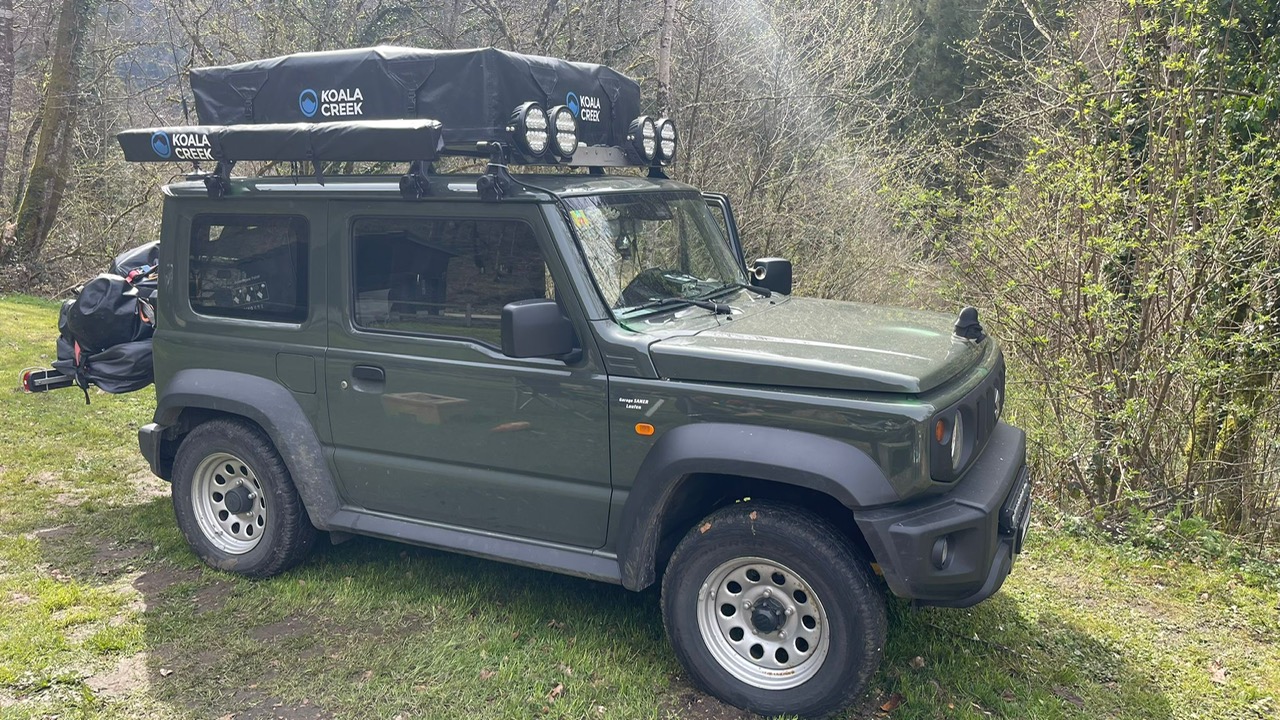
The short answer: a roof top tent on a surprising number of cars—probably yours too. Whether a roof top tent fits roof top tent your car depends on your vehicle’s maximum roof load capacity and the roof rack system you use, not just on the weight of the tent itself. SUVs, station wagons, vans, and even many compact cars can easily roof top tent a roof top tent . In this blog, we explain how roof load works, why you often reach the limit later than you think, and how you can find out for sure which models fit your car in just a few seconds.
Why this question is on almost everyone's mind
“Will a roof top tent fit on my car?” It’s one of the questions we hear most often, and understandably so. A roof top tent bulky, and when you look up the specifications of your roof rack, you might be startled by a number like 75 or 100 kilograms. It then seems as though almost no tent will fit. Yet that’s not actually the case, and it’s due to a misunderstanding about how roof loads work. Once you understand the difference between load capacity while driving and load capacity when stationary, the whole picture falls into place. We’ll walk you through it step by step.
Dynamic and static roof loads: the key difference
This is the key point, and if you don’t remember anything else from this blog, remember this. There are two types of roof load, and they differ greatly in terms of how much weight your roof can support.
Dynamic roof load (while driving)
The dynamic roof load is the maximum weight your car’s roof is designed to carry while driving. This is the figure specified by the car manufacturer, which can usually be found in your owner’s manual. For most passenger cars, this ranges between 50 and 100 kilograms. That number may seem low, but it has been deliberately set on the conservative side. This is because additional forces are exerted on the roof while driving: due to acceleration, braking, turns, and bumps in the road, the effective weight is greater than what you’d see on a scale. The manufacturer takes this into account, so the dynamic roof load always includes the weight of the roof rack system itself plus the folded-up tent.
Static roof load (when stationary)
The static roof load is the weight your roof can support when the car is stationary, for example, when your roof top tent set up and two people are sleeping inside it. This figure is much higher than the dynamic roof load, typically around 250 to 350 kilograms, depending on your car. That may sound illogical, but it’s exactly why rooftop tents exist in the first place. When you’re lying in the tent, the car isn’t moving, and there are no jolts or forces from turning or braking. The roof only has to bear a steady, static weight, and a car roof can easily handle that.
In other words: the combined weight of you and your travel companion inside the tent is considered part of the static roof load, not the dynamic load. So, to determine whether a roof top tent will fit roof top tent your car, you only need to consider the dynamic roof load in relation to the weight of the tent plus the roof racks. You don’t need to factor in the weight of the occupants. That insight alone is enough to put many people’s minds at ease.
Just how heavy are our roof tents, anyway?
Our models are lighter than many people expect. The Koala Creek Teide weighs 58 kilograms, making it our lightest roof top tent, designed specifically with smaller cars in mind. The Eiger weighs 65 kilograms and the Teide weighs 66 kilograms. Our hardcover weigh slightly more: the Roadtrip weighs 69 kilograms and the Outback weighs 74 kilograms. The Teide , our most spacious softcover larger families, weighs 73 kilograms.
To answer the question “Will this fit on my car?”, add the weight of the tent to the weight of your roof racks. Depending on the type, a complete set of roof racks typically weighs between 4 and 7 kilograms. A Teide with roof racks, for example, weighs around 65 kilograms, well within the dynamic roof load capacity of many vehicles. We make a conscious decision to keep our entry-level models relatively lightweight, precisely because we want a roof top tent to be accessible roof top tent as many people as possible.
Which cars are suitable for a roof top tent?
When most people think of a roof top tent , they roof top tent picture a rugged off-road vehicle, but the range of suitable cars is much broader. Below, we’ll go over the most common types of vehicles.
SUVs and off-road vehicles
These are the classic vehicles for roof tents, and for good reason. SUVs and 4x4s typically have a high dynamic roof load capacity and a sturdy roof structure. Virtually all of our models fit this type of vehicle without any issues. If you have a Land Cruiser, Defender, or a similar vehicle, you’re almost always in good shape when it comes to load capacity.
Station wagons and family cars
A common misconception is that you absolutely need a large SUV. That’s not true. Most station wagons and roomier family cars have a dynamic roof load capacity that’s more than sufficient for a roof top tent, especially for our lighter softcover . A Teide or Teide is an excellent match for many family cars, especially if you go on vacation occasionally rather than traveling overland full-time.
Vans and RVs
Vans such as the Volkswagen Transporter, Ford Transit, or similar models make excellent roof tent carriers. They often have a high roof load capacity and a large, flat roof surface. An added bonus: a roof top tent a van gives you an extra sleeping space on top of the room you already have inside. It’s a popular choice among travelers who want a little more comfort.
Compact passenger cars
Even if you have a smaller car, you roof top tent have to rule out a roof top tent . However, it’s really important to check the dynamic roof load capacity, as this is sometimes lower on compact models. Weighing 58 kilograms, our Teide is specifically designed for this segment. Many smaller cars with a suitable roof rack system can carry this tent. It’s precisely with this type of vehicle that it pays to check carefully beforehand, and we have a handy tool for that—more on that in a moment.
The role of your roof rack system
A roof top tent never roof top tent directly on your roof. It is mounted on a roof rack system, and that system is a crucial part of the equation. Here are a few things to keep in mind.
First of all, the weight of the roof racks themselves is factored into the dynamic roof load. That is one of the reasons why we recommend not calculating down to the last kilogram, but leaving some margin. In addition, the load capacity of the racks themselves is important: they must be suitable for the weight of the tent as well as dynamic use. Sturdy, closed crossbars with sufficient load-bearing capacity are the standard for roof tent use. Finally, the mounting method is important. Racks secured to fixed mounting points or your car’s roof rails offer more stability than clamp systems on a bare roof edge. If you have any doubts about your roof rack system, please check with one of our dealers. They’ll be happy to help you find the right combination for your car.
This way, you'll know for sure in just a few seconds if it fits
You don’t have to dig through manuals yourself to find out if a roof top tent your car. That’s why we’ve developed a roof load checker that does the math for you. Simply enter your make, model, trim level, and year, and you’ll immediately see your vehicle’s maximum roof load and which Koala Creek are compatible. No guesswork, no complicated calculations—just a clear answer to the question that brought you here.
The checker is located at the top of our roof tent page. We recommend that everyone start here before making a decision. It takes less than a minute and eliminates exactly the uncertainty this blog is all about. It’s something we regularly hear from our customers as the moment when their doubts truly disappeared.
Frequently Asked Questions About Roof Tents and Roof Loads
Can I roof top tent in the roof top tent if it weighs more than my roof rack can handle?
Yes. The combined weight of you and your travel companion inside the pitched tent is considered part of the static roof load, which is much higher than the dynamic roof load. Therefore, you don’t need to include the sleeping weight when determining whether the tent fits on your car. Only the weight of the tent plus the roof racks needs to be within the dynamic roof load limit.
How do I find out the maximum roof load capacity of my car?
The maximum roof load is listed in your car’s owner’s manual, often under the heading “roof load” or “roof weight.” If you’re not sure, our roof load checker will give you the answer based on your car’s make, model, and model year.
Do I need special roof top tent racks for a roof top tent?
You need sturdy crossbars with sufficient load capacity that are suitable for dynamic use. Lightweight bike rack-style systems are not sufficient. Our dealers will be happy to advise you on a suitable roof rack system for your vehicle.
Will a roof top tent fit roof top tent a car without roof rails?
This is often the case, provided there are suitable mounting points or a compatible roof rack system available for your model. This varies by car, so check the roof load calculator or consult a dealer.
Ready to find out which roof top tent fits your car?
Chances are, a roof top tent will fit roof top tent on your car—often more easily than you might expect. The quickest way to find out for sure is to use our roof load checker: enter your vehicle details and see right away which models are compatible. If you’d prefer personal advice and want to experience the tents in person, we’d be happy to help. Find a dealer near you and talk to people who use them on their own adventures. That way, you can make the right choice for your next adventure with confidence.